How the Brain Responds to Slot Machines and Sports Betting Wins
A near-miss on a UK high street slot machine or a last-minute winning bet can trigger a profound neurological response that keeps us playing, and our team is here to explain the science behind it. Behind the flashing lights and the thrill of the win lies a complex, hardwired system in your brain—the reward pathway. This system, evolved to reinforce survival behaviours like eating and social bonding, is brilliantly exploited by modern gambling formats. From the sensory bombardment of online slots to the strategic allure of in-play football betting, understanding this neuroscience is key to comprehending why gambling can become so compelling and, for some, so destructive.
The Neuroscience of Reward: A Quick Primer
At the heart of gambling’s allure is the brain’s mesolimbic reward pathway. When we experience something pleasurable or anticipate a reward, a cluster of neurons in the midbrain communicates with a key region called the ventral striatum. This communication is powered by the neurotransmitter dopamine. Think of dopamine less as a simple ‘pleasure chemical’ and more as the brain’s ‘teaching signal’ for reinforcement learning. It flags an event as important, shouting “Pay attention! Remember what you just did to make this happen!” This system is crucial for learning and motivation, but it is also the primary target that gambling activities hijack to create their powerful hold.
Slot Machines and the ‘Near-Miss’ Illusion
Modern gambling machines, from the once ubiquitous high-street Fixed Odds Betting Terminals (FOBTs) to the vast array of online slots, are masterclasses in neuromarketing. They are specifically designed to maximise engagement by triggering the brain’s reward system, often in deceptive ways. A pivotal concept here is the ‘near-miss’—when symbols on a slot machine align just one position away from a jackpot. Research from the University of Cambridge has been pivotal in studying this effect, using brain scans to show that near-misses activate the ventral striatum in a strikingly similar way to actual wins. The brain interprets this near-win not as a loss, but as an encouraging signal to try again, dramatically increasing the urge to continue playing.
Sensory Overload: Lights, Sounds, and Celebrations
The neurological impact is amplified by a barrage of sensory cues. A near-miss or a win is accompanied by a symphony of celebratory sounds, flashing lights, and animated graphics. These sensory stimuli become conditioned cues, directly associated with the dopamine release. Over time, the mere sight of the slot machine’s interface or the sound of its reels spinning can trigger anticipatory dopamine activity, priming the brain for play and making disengagement more difficult.
Random Ratio Reinforcement and ‘Losses Disguised as Wins’
Slot machines operate on a variable ratio reinforcement schedule—rewards are given out at unpredictable intervals. This is the most powerful schedule for maintaining behaviour, as demonstrated by B.F. Skinner’s famous experiments. The brain learns that the next spin could be the big one, leading to persistent play. Furthermore, modern machines often employ ‘losses disguised as wins’ (LDWs), where a winning sound and animation play for a return that is less than the original bet. The brain’s reward centre responds to this positive feedback, even though the player has actually lost money, creating a powerful and misleading reinforcement loop.
Sports Betting and the ‘I Knew It’ Fallacy
While slots prey on reflexive reward pathways, sports betting engages higher-order cognitive processes, weaving a more complex neurological and psychological tapestry. Betting on a football match with a British betting brand like bet365 or William Hill involves analysis, prediction, and delayed gratification. The dopamine surge here is often tied to the moment of confirmation—when your predicted outcome materialises. This reinforces the belief in one’s own skill and knowledge, a phenomenon known as the ‘I knew it’ fallacy, where chance-based success is misattributed to personal expertise.
The Role of Anticipation and ‘In-Play’ Betting
The period between placing a bet and the event’s outcome is a potent phase of dopamine-driven anticipation. The brain savours the potential reward, maintaining engagement for hours or even days. In-play or live betting, a major feature of modern digital platforms, intensifies this dramatically. Each changing odd, goal, or point becomes a new micro-opportunity for reward prediction, creating a rapid-fire cycle of anticipation and outcome that can be incredibly absorbing and difficult to step away from.
Cognitive Bias and the Illusion of Control
Sports betting fosters a strong illusion of control. Bettors use statistics, team news, and personal knowledge to inform their decisions, which makes the outcome feel more skill-based than it truly is. This engages brain regions associated with planning and agency. When a bet wins, the brain credits this ‘skill,’ further entrenching the behaviour. Common cognitive biases at play include:
- Confirmation Bias: Seeking out information that supports your chosen bet and ignoring contradictory evidence.
- Hindsight Bias: Believing the outcome was predictable all along after it has occurred (“I knew they’d win”).
- The Gambler’s Fallacy: Mistakenly believing that past independent events influence future ones (e.g., “they’re due a win”).
When the Reward System Misfires: The Path to Addiction
For most people, gambling is a recreational activity. However, for some, repeated exposure can cause the brain’s reward system to dysregulate, paving the path to a behavioural addiction. UK researchers at institutions like the National Addiction Centre have detailed this transition. The brain begins to adapt to the constant dopamine surges, leading to tolerance—needing to gamble more, and for higher stakes, to achieve the same neurological ‘hit.’ The activity shifts from being a source of pleasure to a compulsive need.
Dysregulated Dopamine and Chasing Losses
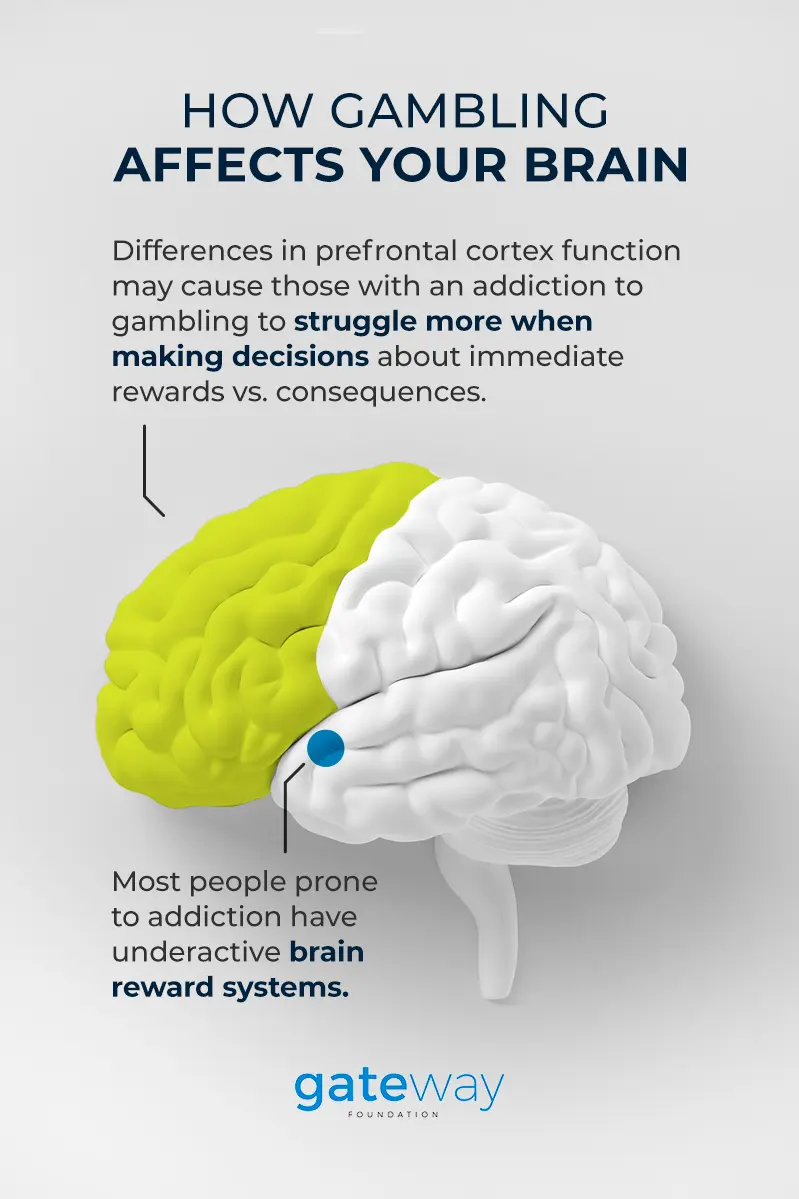
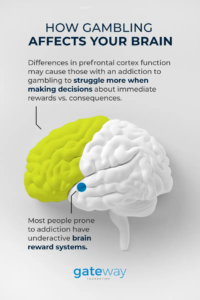
In problem gambling, dopamine activity becomes erratic. It becomes less about the anticipation of a win and more about the desperate need to alleviate the negative emotional state of craving or the distress of a loss. This neurological state fuels the destructive cycle of ‘chasing losses.’ The brain’s prefrontal cortex, responsible for impulse control and rational decision-making, becomes impaired, making it increasingly difficult to stop despite mounting negative consequences.
The Shift from Pleasure to Compulsion
The final stage in the hijacking of the reward system is the shift from a ‘liking’ to a ‘wanting’ state. The gambler may no longer derive genuine pleasure from the activity. Instead, it becomes a compulsive behaviour driven by a dysfunctional motivation system, akin to what is observed in substance addictions. The gambling behaviour is now maintained by the need to avoid withdrawal-like symptoms of irritability, anxiety, and dysphoria.
UK Research and Emerging Insights
The UK is at the forefront of researching the neuroscience and genetics of gambling harm. The NHS Northern Gambling Service not only provides specialised, free treatment for those affected but also conducts vital research into the efficacy of interventions and the underlying psychology of addiction. Simultaneously, the UK Gambling Commission, as the industry regulator, funds and promotes independent research into gambling-related harms, ensuring findings inform both policy and protective measures. This multi-pronged approach is crucial for developing a public health response to gambling that is grounded in solid, homegrown science.
Understanding the precise brain mechanisms triggered by a near-miss on a slot or a successful sports bet is not just academic. It is a crucial step towards demystifying the hold gambling can have, informing more effective public health strategies, regulatory policies, and personal tools for harm reduction across the UK. By recognising that the allure is not a moral failing but a neurological vulnerability exploited by sophisticated design, we can foster a more compassionate and science-led approach to prevention, treatment, and support.



Post Comment
You must be logged in to post a comment.